Technical Training Module 01
Electrical Fundamentals
A foundation page for understanding voltage, current, resistance, work, and heat before testing any automotive circuit.
This page is written as a workshop training guide: learn the system, set up the test correctly, prove the circuit, interpret the result, and record the repair.
What This Lesson Teaches
Objective 01
Explain voltage, current, resistance, power, and ground in practical workshop language.
Objective 02
Recognize the difference between an open circuit, a short circuit, and high resistance.
Objective 03
Choose between voltage, resistance, current, and voltage-drop tests.
Objective 04
Apply Ohm’s law thinking without turning every diagnosis into a calculation exercise.
How The System Works
Electrical diagnosis is built on three relationships: voltage is the electrical pressure, current is the movement of electrons through the circuit, and resistance limits that movement. A circuit can only do work when there is a complete path from the source, through the load, and back to the source.
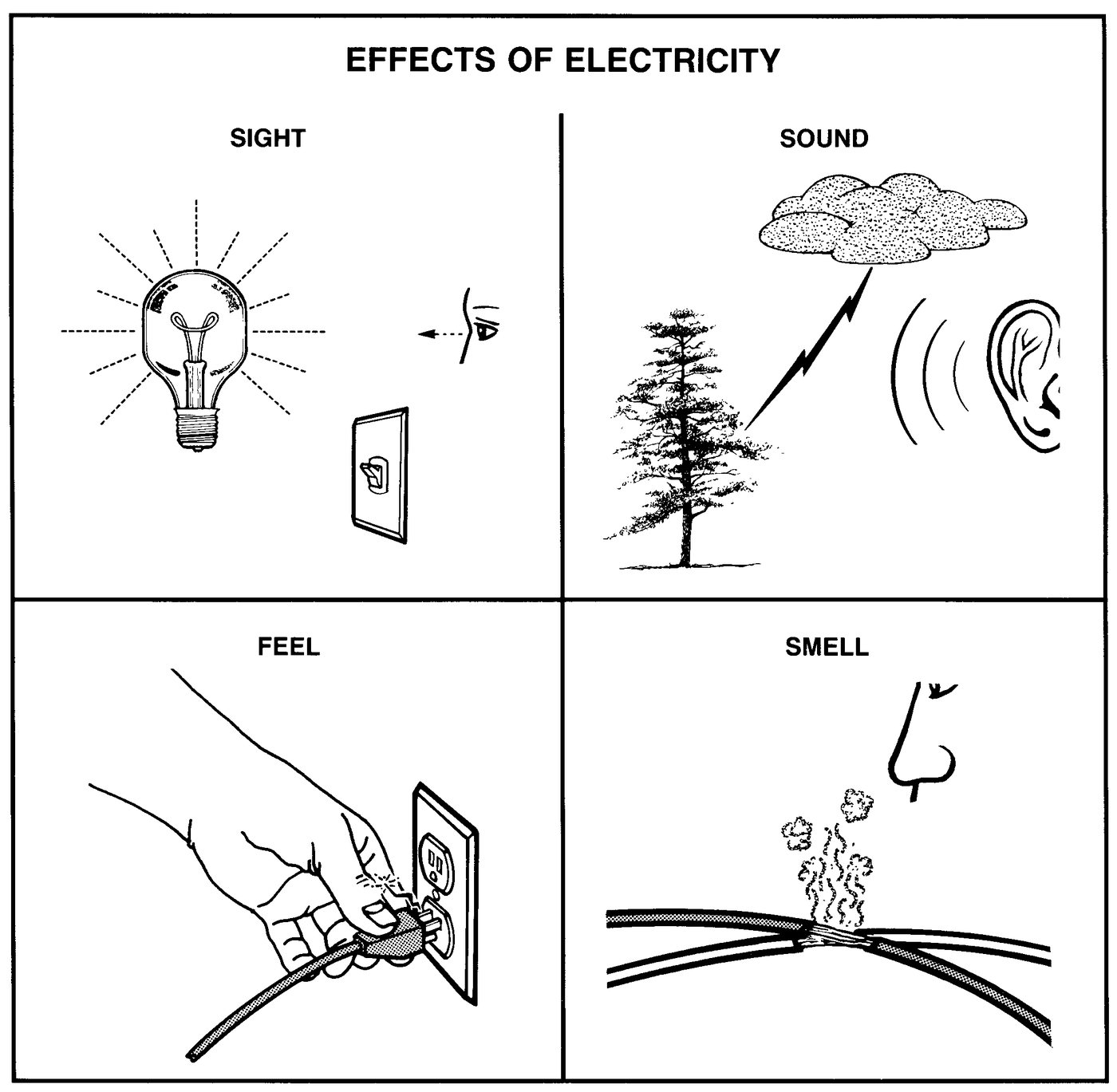
In vehicle wiring, the effects of electricity are visible through lamps, motors, solenoids, heaters, coils, injectors, and control signals. A technician should always ask what the circuit is expected to do, what load it is meant to operate, and where the return path is located.
The most common mistake is measuring voltage without understanding current flow. A corroded wire may show voltage on a digital meter but fail when the load is connected. That is why voltage drop and loaded testing matter.
Tools, Safety, And Setup
Required tools
- Digital multimeter with min/max and duty-cycle or frequency capability
- Incandescent test light for loaded power/ground checks where safe
- Back-probe pins, fused jumper leads, and connector pinout references
- Current clamp or low-amp probe for motors, pumps, solenoids, and alternator checks
- Oscilloscope or graphing meter for crank, cam, MAF, ignition, and oxygen sensor signals
Safety and setup
- Work with the vehicle secure, transmission in park or neutral, wheels chocked, and the ignition state deliberately controlled.
- Do not pierce sealed wiring unless there is no better access point. Back-probe from the connector side where possible and reseal anything disturbed.
- Use the correct meter range before connecting to a circuit. A meter on the wrong range can damage the meter, the ECU, or the circuit.
- Load-test power and ground circuits. An unloaded circuit can show battery voltage and still fail when the component is asked to work.
- Disconnect ECUs and sensitive modules before doing resistance checks unless the specific procedure says the circuit can remain connected.
Step By Step Test Procedure
Prove the source and return path
- Measure battery voltage directly at the battery posts.
- Measure the same circuit at the load connector with the load commanded on.
- Move the meter ground from battery negative to the local ground point and compare the reading.
- If voltage changes when the ground point changes, inspect the ground path before replacing the load.
Find high resistance with voltage drop
- Command the circuit on so current is flowing.
- Place the meter leads across the suspected section of wire, connector, fuse, relay contact, or ground strap.
- A healthy connection should drop very little voltage. A large drop means that section is consuming voltage that should be available to the load.
- Repair the connection and repeat the test under load.
Pre-test setup and pinout confirmation
- Confirm the exact engine, ECU, connector, and system variant before using a pin number or expected reading.
- Print or open the wiring diagram and mark the fuse, relay, ECU pins, connector joins, splices, and ground points.
- Inspect the connector physically before probing it. Look for pushed-back pins, spread terminals, corrosion, oil, water, heat marks, and broken locks.
- Stabilize battery voltage before testing. Low system voltage can create false sensor, ECU, starter, alternator, and transmission faults.
Loaded power and ground verification
- Test the feed and ground with the circuit connected and commanded on whenever it is safe to do so.
- Compare voltage at the component to voltage at the battery while the circuit is working.
- Voltage-drop the power side and ground side separately so the fault is not hidden by a good-looking open-circuit voltage reading.
- Do not move to sensor or ECU replacement until the supply and return path are proven under load.
Expected Readings And What They Mean
| Check | Normal Result | What The Result Means |
|---|---|---|
| Open switch or open wire | Voltage may exist on the feed side, but no current reaches the load. | Do not condemn the load until the feed and return are proven. |
| High resistance connection | Circuit may show voltage unloaded, then collapse under load. | Look for heat, discoloration, loose terminals, corrosion, or poor crimps. |
| Short circuit | Fuse opens, wiring heats, or circuit voltage is pulled down. | Protect the harness with a fused jumper or current-limited test method. |
Fault Interpretation
| Fault Type | Typical Symptom | Next Test |
|---|---|---|
| Open circuit | No current flow, no voltage on the load side, or infinite resistance when isolated. | Find the break by halving the circuit and testing from the source toward the load. |
| High resistance | Voltage appears correct with no load but drops when the circuit is asked to work. | Use voltage-drop testing under load instead of relying on continuity alone. |
| Short to ground or power | Fuse blows, signal is pinned high or low, or more than one circuit behaves incorrectly. | Disconnect branches until the fault disappears, then inspect that branch closely. |
Lexus V8 Swap Application
On a standalone Lexus V8 harness, always confirm the engine family, ECU part number, immobilizer state, transmission type, and body-interface requirements before applying a generic test result.
Many swap problems are caused by missing feeds, poor grounds, incorrect relay control, or connector damage rather than a failed ECU.
Record These Results
Battery voltage before testing
Record the exact result before moving to the next test. This makes the diagnosis repeatable and avoids guessing.
Connector pin numbers tested
Record the exact result before moving to the next test. This makes the diagnosis repeatable and avoids guessing.
Voltage, resistance, frequency, or waveform result
Record the exact result before moving to the next test. This makes the diagnosis repeatable and avoids guessing.
Whether the circuit was tested loaded or unloaded
Record the exact result before moving to the next test. This makes the diagnosis repeatable and avoids guessing.
Final fault location and repair made
Record the exact result before moving to the next test. This makes the diagnosis repeatable and avoids guessing.
Use This Carefully
This training page is an independent Lexus V8 Engines LLC rewrite for educational and diagnostic support. Lexus V8 Engines LLC is not affiliated with or endorsed by Toyota Motor Corporation. Always use the correct factory service information for final specifications, safety procedures, and vehicle-specific wiring.
When a harness or ECU is being sent to Lexus V8 Engines LLC, print or save the recorded readings and include the engine, ECU, transmission, immobilizer status, connector photos, and the exact symptom.