Identify the idle-control design
- Confirm whether the donor uses cable throttle and a separate valve or electronic throttle. Match the ECU, throttle body, pedal where fitted and harness.
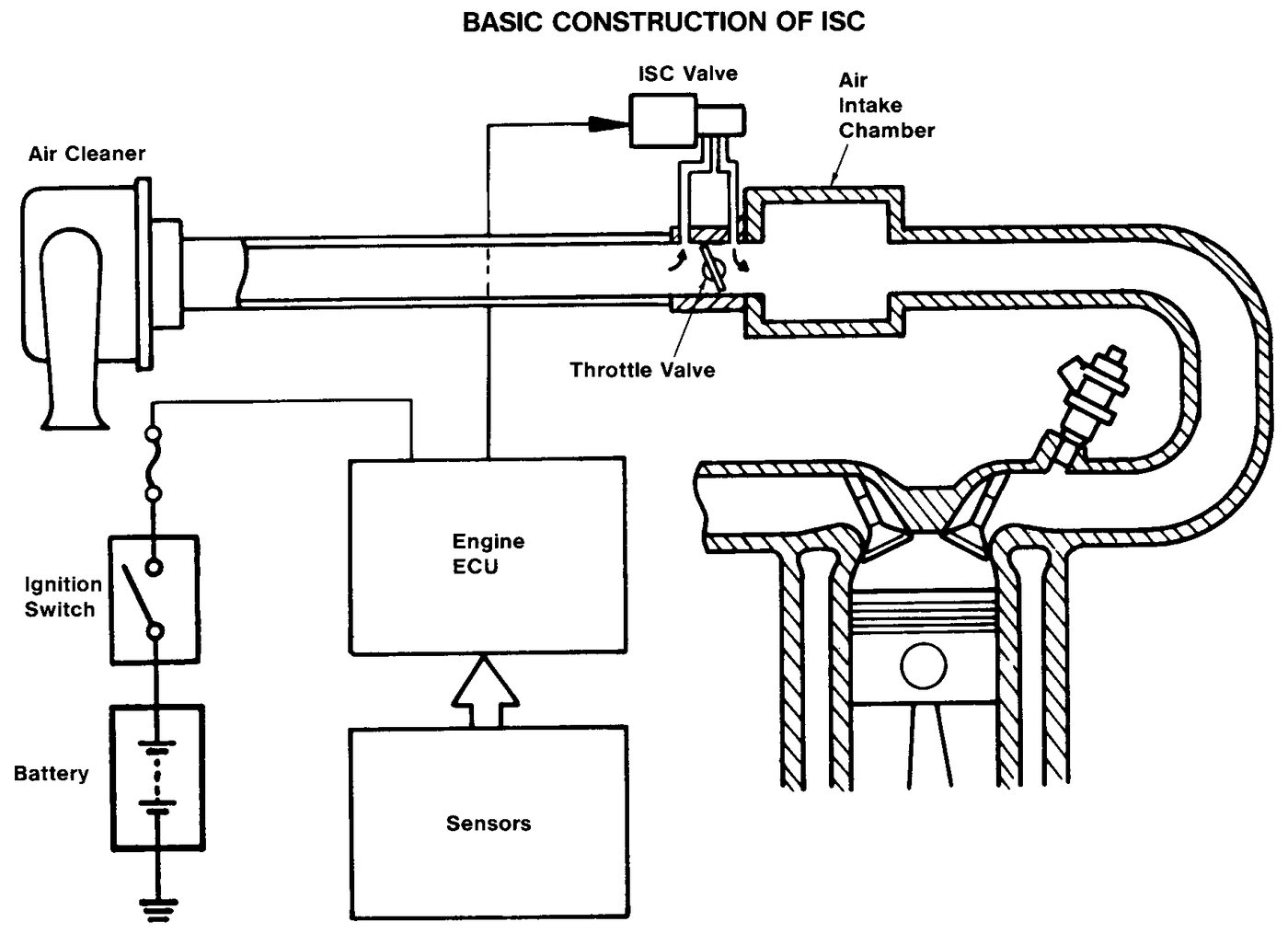
The ECU selects an idle target from coolant temperature, throttle state, transmission range and applied loads rather than holding one universal speed. Cable-throttle systems may meter bypass air with an idle-speed-control valve, while electronic-throttle systems adjust the throttle motor. The ECU watches actual engine speed and changes its command to compensate for warming, electrical demand, air-conditioning, steering load or gear engagement where those inputs are fitted.
High, low or unstable idle can result from unmetered air, a sticking throttle or idle valve, incorrect temperature or throttle data, a misfire, weak system voltage or a missing swap-interface input. A mismatched ECU, throttle body, accelerator pedal or idle valve can also prevent correct control. Compare target speed, actual speed, input states and actuator command before adjusting anything; do not alter a factory throttle stop.
| Check | Expected Evidence | Diagnostic Meaning |
|---|---|---|
| Target versus actual idle | Actual engine speed follows changes in the ECU target after normal stabilization time for that system | A persistent difference requires air, load, combustion, actuator or mechanical checks rather than arbitrary adjustment. |
| Closed-throttle recognition | The ECU recognizes rest position and throttle or pedal signals remain plausible and correlated | Incorrect recognition can prevent idle strategy and indicates binding, sensor, wiring or component mismatch. |
| Idle or throttle active test | Command and control activity change, followed by a repeatable change in airflow or engine speed | Command without response points to the actuator, circuit, throttle body or air-path restriction. |
| Load compensation | ECU command increases appropriately and speed recovers when a recognized load is applied | Speed drop without command change suggests a missing input; command change without recovery suggests insufficient airflow or torque. |