Technical Training Module 37
Oxygen Air-Fuel Sensors
Oxygen Air-Fuel Sensors as a diagnostic page for ECU input signals, output decisions, sensor checks, and fault-code interpretation.
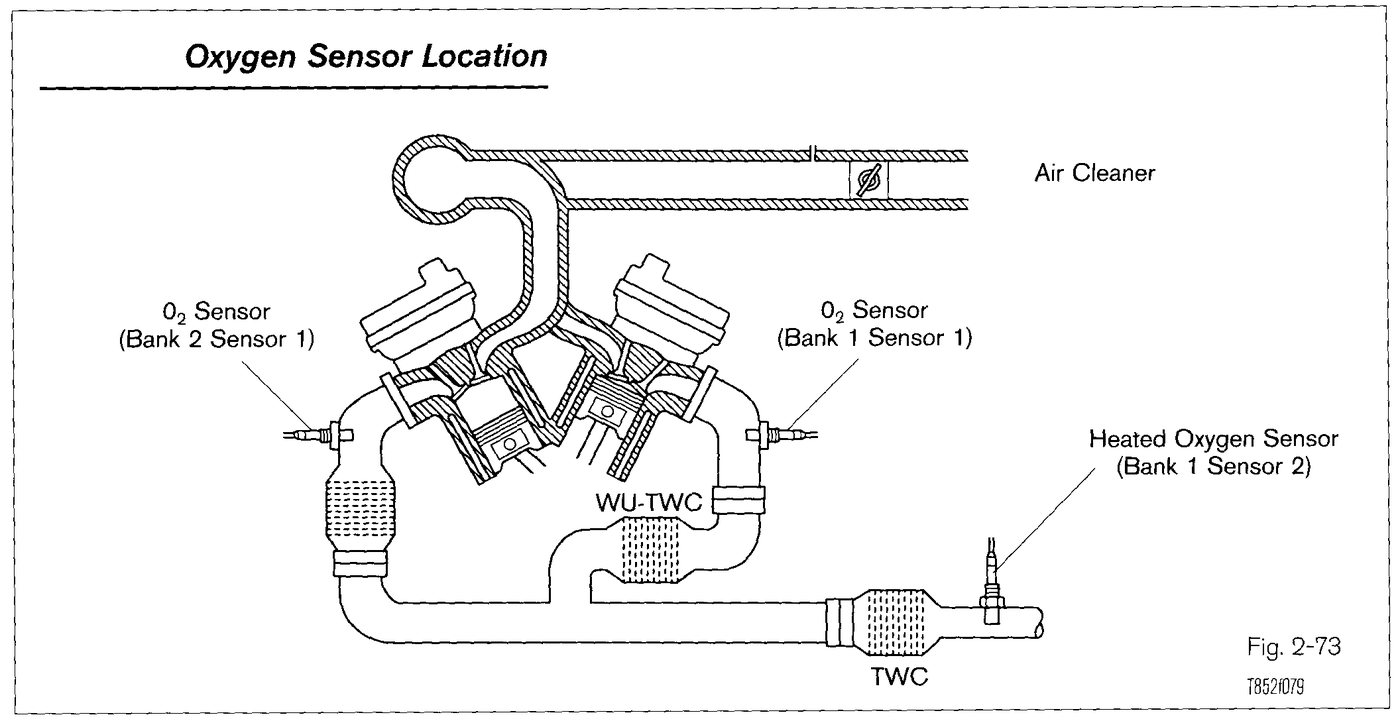
How The System Works
Engine control diagnosis depends on understanding how the ECU sees the engine. Inputs tell the ECU about temperature, position, speed, air, pressure, knock, exhaust oxygen, and switch states. Outputs control fuel, ignition, idle, relays, fans, emissions devices, and transmission functions where fitted.
The technician should verify the electrical signal at the sensor and at the ECU where needed. A scan value can be wrong because of the sensor, the wiring, the reference circuit, the ground, the ECU input, or the interpretation strategy.
Most sensor checks should begin with reference voltage, sensor ground, and signal behavior. Then compare the signal to the real condition and to other related inputs.
Step By Step Test Procedure
Three-wire sensor check
- Identify reference, ground, and signal wires from the wiring diagram.
- Check reference voltage at the sensor with it connected where possible.
- Voltage-drop the sensor ground to battery negative with the system powered.
- Move the sensor through its operating range and watch for a smooth signal change.
- If the signal is correct at the sensor but wrong at the ECU, test the wire between the sensor and ECU.
Two-wire sensor check
- Identify whether the sensor is a variable resistor, magnetic pickup, switch, or special signal device.
- Disconnect the ECU if measuring resistance where required.
- For magnetic speed sensors, crank or rotate the engine/component and measure AC voltage or waveform.
- For thermistors, compare resistance or voltage change to temperature change.
Expected Readings And What They Mean
| Check | Normal Result | What The Result Means |
|---|---|---|
| Battery supply | 12.4 to 12.8 volts key off on a charged battery | Low battery voltage can make good wiring look faulty. Charge or stabilize the battery first. |
| Five-volt reference | Usually close to 5.0 volts with sensor connected | A shorted sensor or harness branch can pull the reference down for several sensors at once. |
| Ground voltage drop | As close to 0.0 volts as practical under load | Voltage on the ground side means resistance in the ground path. |
| Switch or relay feed | Battery voltage on the supply side and controlled voltage on the output side | Test both sides of the load. One good side does not prove the full circuit works. |
| Narrow-band oxygen sensor | Switches between lean and rich once hot and in closed loop | A stuck reading can be sensor, heater, exhaust leak, mixture fault, or wiring. |
| Air-fuel ratio sensor | Uses a controlled circuit and should be tested by service information or scan data | Do not treat it like a simple one-wire oxygen sensor. |
Use This Carefully
This training page is an independent Lexus V8 Engines LLC rewrite for educational and diagnostic support. Lexus V8 Engines LLC is not affiliated with or endorsed by Toyota Motor Corporation. Always use the correct factory service information for final specifications, safety procedures, and vehicle-specific wiring.