Define the starting complaint
- Verify the engine turns mechanically, the battery is stabilized, the transmission is safely in park or neutral or the clutch is operated, and the vehicle cannot move.
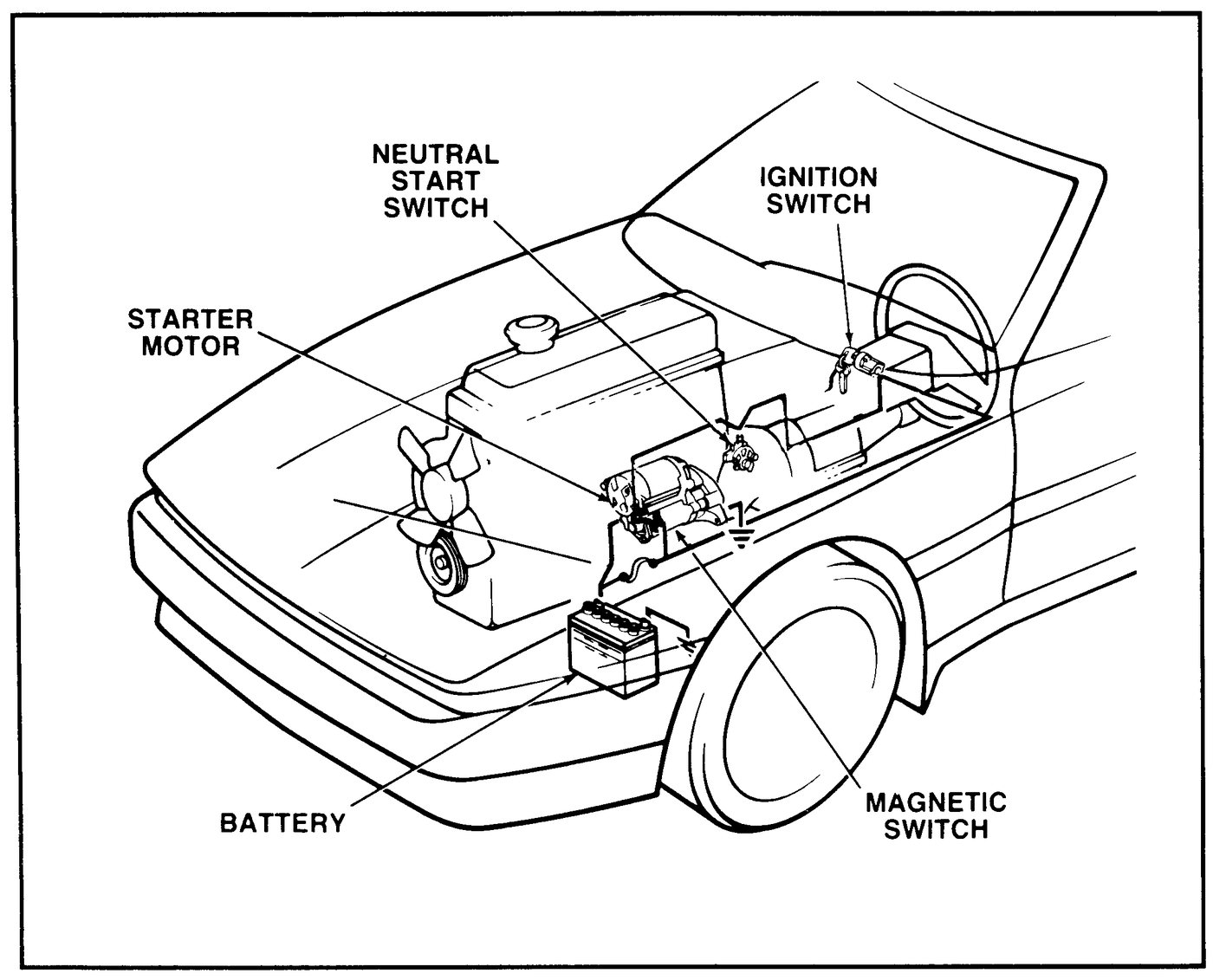
The starter circuit has a high-current path from the battery through the cable, solenoid contacts and starter motor back through the engine ground, plus a control path that delivers the start request to the solenoid. Depending on the Toyota/Lexus donor, that control path can include the ignition switch or start button, starter relay, park/neutral or clutch switch, ECU/body-module logic and security authorization.
First separate no-crank, slow-crank and crank-no-start complaints. On some systems security permits cranking but inhibits engine operation; on others it participates in starter control, so follow the exact donor diagram and scan-data logic. If the solenoid command is present, test the battery, high-current cables, grounds, starter and mechanical load; if it is absent, trace the request and interlocks without bypassing unknown terminals.
| Check | Expected Evidence | Diagnostic Meaning |
|---|---|---|
| Start request and interlock data | Requested state and park/neutral or clutch status change as specified for the donor | An incorrect state directs diagnosis to the switch, range input, body logic or wiring. |
| Starter-relay coil and contacts | Coil command is valid and loaded contact output remains within factory voltage-drop specification | Command without output indicates relay or socket trouble; no command requires control-path diagnosis. |
| Solenoid command terminal | Reaches the specified state while start is requested | Correct command with no crank moves diagnosis to the high-current path, starter or mechanical load. |
| Positive and ground cranking paths | Each remains within the factory voltage-drop allowance | Excess loss identifies the cable, junction, terminal, engine ground or battery connection on that side. |